Still alive, thanks to the pharmaceutical industry
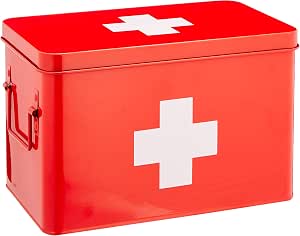
I remember when the family medicine cupboard was a fairly modest affair. A packet of aspirin, a bottle of TCP, a few sticking plasters and possibly a tube of ointment that had been there since the declaration of independence.
That was about it.
If you cut yourself, you got a plaster. If you had a headache, you took an aspirin. If you had a sore throat, somebody suggested gargling with salt water. And if you were really ill, your mother would put you to bed and inform you that you’d probably be grand in the morning.
TCP was particularly versatile. It was applied to cuts, grazes, insect bites and practically anything else that might be wrong with you. Its smell was so distinctive that you could identify an injured child from fifty yards.
There was also a firm belief that if something stung when applied, it must be doing you good.
Nobody questioned this logic. Pain was simply part of the healing process.
How times have changed.
Nowadays, the average Boomer’s medicine cupboard resembles the dispensary of a small rural hospital.
There are tablets for blood pressure, cholesterol, acid reflux, arthritis and conditions whose names we cannot pronounce. There are vitamins, supplements, creams, sprays and medications intended to counteract the side effects of other medications.
We have become walking pharmacies.
I used to regard taking a tablet as something you did when you were ill. Now it is something you do to prevent yourself from becoming considerably more ill.
And the timing is important.
Some tablets must be taken in the morning, preferably before breakfast. Others must be taken with food. Some are best taken at night, while others must not be taken within two hours of something else.
One tablet requires an empty stomach, another requires a full stomach, and a third apparently prefers you to have eaten something substantial but not too recently.
You would need a degree in pharmacology to organise breakfast.
I sometimes wonder whether the pharmaceutical companies have considered producing a complete Boomer breakfast tablet. One large capsule containing everything you need for the day.
It would save an enormous amount of time.
Of course, there would probably be a warning that it should not be taken with food, alcohol, dairy products, coffee or other medication.
So that would be breakfast ruined.
There was a time when my memory was perfectly capable of handling a complicated daily schedule. I could remember meetings, appointments, deadlines, where the children had to be on a Tuesday evening and whether somebody needed collecting from football practice.
Now I struggle to remember whether I’ve taken my lunchtime tablet.
This is a particularly irritating problem.
You stand in front of the medicine cupboard, staring at the packet.
Did I take one?
I’m almost certain I did.
Or was that yesterday?
You attempt to reconstruct the events of the previous hour. You remember making coffee, reading something on the computer and answering the telephone.
But the tablet?
Nothing.
You shake the packet, as though the remaining tablets might somehow provide evidence.
They don’t.
You consider taking another but realise that doubling up on medication is probably not a sensible solution to a failing memory.
So you check the instructions and do your best to establish whether the dose has already been taken.
The solution, of course, is obvious.
A pill organiser.
You know the things. Plastic boxes divided into compartments marked Monday, Tuesday, Wednesday and so on, with further divisions for morning, afternoon and evening.
They are practical, inexpensive and would solve most of the problem.
Naturally, I refuse to have one.
There are certain concessions to old age that a man should not be expected to make without a struggle.
A pill organiser is one of them.
Once you start filling little compartments marked MON AM and THU PM, you have crossed a line. You are no longer a reasonably fit older gentleman taking a few necessary medications. You have become someone whose week is organised by a plastic box.
I know perfectly well that this is ridiculous.
But I have my standards.
Meanwhile, the pharmacist has become one of the most important people in my life.
I used to visit a pharmacy perhaps twice a year. Nowadays, the pharmacist knows me by my first name, recognises my prescription before I hand it over and occasionally asks whether I’m running low on something.
It’s a level of personal attention I haven’t experienced since my mother used to check whether I’d washed behind my ears.
I suspect he knows more about my physical condition than most of my relatives.
He certainly knows more than I would care to tell them.
This raises an alarming possibility.
Imagine if life insurance companies were allowed to consult your pharmacist before quoting a premium.
“Good morning. We’d like a quotation for a gentleman in his seventies.”
“Certainly. Does he take any medication?”
“Perhaps you’d better speak to his pharmacist.”
A brief telephone conversation follows.
There is a long silence.
Then the insurance company politely suggests that perhaps I should consider investing in a prepaid funeral plan instead.
The cost of all this pharmaceutical assistance is another matter.
Between prescriptions, over-the-counter remedies and the occasional supplement recommended by somebody who read an article on the internet, keeping a Boomer operational can become a significant household expense.
There are months when the combined cost rivals the broadband and mobile phone bills.
And unlike broadband, there is no opportunity to threaten to change providers in the hope of getting a better deal.
You can hardly ring the pharmacist and announce that you’ve found a cheaper blood pressure tablet elsewhere and would like to speak to the customer retention department.
Even more amusing are the information leaflets supplied with medication.
These are usually folded into a tiny rectangle and printed in a typeface apparently designed to discourage anyone from reading them.
Once unfolded, the leaflet is approximately the size of a bedsheet.
It begins with a reassuring explanation of what the medicine is intended to treat.
Then comes the list of possible side effects.
Headaches, dizziness, nausea, vomiting, blurred vision, sleeplessness, drowsiness, loss of appetite, increased appetite and various other alarming possibilities.
Some medications appear capable of producing every symptom known to medical science.
You begin reading the leaflet feeling reasonably healthy and finish it convinced that you should be admitted to hospital immediately.
The leaflet helpfully advises you to consult your doctor if you experience any of these symptoms.
Given the length of the list, this could become a full-time occupation.
And then there’s going on holiday.
This used to be a fairly straightforward business.
Pack some clothes, toiletries, passport, tickets and perhaps a packet of aspirin in case you overindulged.
Nowadays, preparing for a week’s holiday involves the sort of logistical planning normally associated with a major expedition.
First, you must establish whether you have sufficient medication to cover the entire trip.
Not just seven days, of course. You need extra supplies in case the return flight is delayed, the airport closes or some other unforeseen disaster extends your holiday.
I have learned that the pharmaceutical requirements of a Boomer travelling abroad can be substantial.
There are tablets for morning, afternoon and evening, emergency supplies and medications that must be taken at particular times.
Then comes the problem of packing them.
Should they go in the suitcase or hand luggage?
What happens if the suitcase goes missing?
Should you divide the supplies between bags?
Have you remembered everything?
And what about time zones? If you’re taking a tablet at eight in the morning in Ireland, should you take it at eight in Spain or nine? By the time you’ve worked it out, you need another tablet for the headache.
Airport security provides additional entertainment.
Years ago, our main concern was whether a bottle of shampoo exceeded the permitted liquid allowance.
Now I worry that the contents of my hand luggage might attract the attention of the international drugs squad.
I can imagine the conversation.
“Sir, can you explain why you’re carrying all these tablets?”
“Yes. I’m seventy-four.”
“Oh.”
“Would you like to see the prescriptions?”
“No, that’s quite all right, sir. We understand.”
I suspect age is now a perfectly reasonable explanation for travelling with enough medication to supply a small village.
Of course, the real problem begins when you arrive at your destination.
At home, you have a routine. You get up, have breakfast, take the appropriate medication and generally know what you’re doing.
On holiday, everything changes.
Breakfast is later. Lunch may be missed. Dinner takes place at an entirely different hour, and there may be a glass or two of wine involved.
You suddenly discover that your carefully established medication schedule has collapsed.
You’re sitting in a restaurant at ten o’clock at night, trying to remember whether the tablet you normally take after lunch is still in your pocket.
Your partner asks whether you’ve taken your medication.
You assure her that you have.
Then you check your pocket.
There it is.
You have now reached the stage in life where a romantic dinner can be interrupted by an argument about a blister pack.
I sometimes think that pharmaceutical companies should offer holiday packages for older customers.
Seven nights in the sun, flights included, full board and a qualified pharmacist to supervise the daily medication.
The pharmacist could also organise excursions around tablet times and make sure nobody misses lunch because they have to take something with food.
It would be enormously popular.
There could even be a special evening’s entertainment called Guess the Side Effect, where guests compete to identify which medication is responsible for their latest complaint.
Many of the conditions that can now be managed with tablets were once far more serious. Modern medicine has given our generation the opportunity to live longer, remain active and enjoy years that previous generations might never have had.
We complain about the prescriptions, grumble about the cost and stubbornly resist anything resembling a pill organiser.
But we’re still here.
We’re travelling, gardening, enjoying meals out, irritating our partners and offering unsolicited advice to younger generations who would probably prefer us to keep quiet.
And perhaps that’s the greatest achievement of modern medicine.
Not simply that it keeps us alive, but that it allows us to continue being a nuisance.
I suspect our children occasionally look at us and wonder how much longer we’re planning to hang around.
Well, I have news for them.
Thanks to the combined efforts of my GP, pharmacist and several multinational pharmaceutical companies, I have no immediate plans to depart.
In fact, I’m beginning to suspect that modern medicine could keep the average Boomer going almost indefinitely.
Which must be a deeply worrying prospect for the younger generations.
They’ve been waiting patiently for their inheritance, and here we are, spending it on cruises, restaurants and prescription charges.
Still, they shouldn’t despair.
One day, my children will inherit something.
At the present rate, it’ll be a bathroom cupboard full of tablets, three pairs of reading glasses and a carrier bag of expired prescriptions.
And if they’re very lucky, I’ll leave them the pill organiser.
Still unopened.