When children’s fashion was a form of punishment
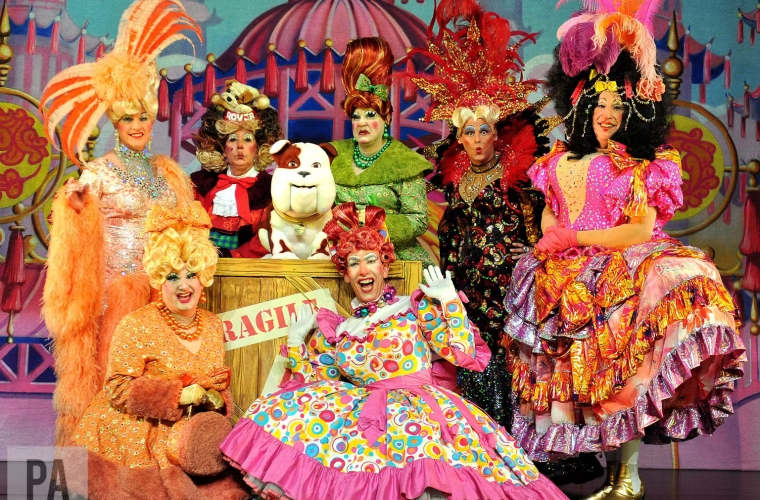
I look at children nowadays and marvel at their clothes. Designer trainers, fashionable tracksuits, expensive jackets and T-shirts bearing the names of people who have apparently become millionaires by kicking footballs or talking into microphones.
Even toddlers seem to have a personal style. I recently saw a child who couldn’t have been more than four wearing an outfit that probably cost more than my first car.
And they have opinions about what they wear.
This is a relatively recent development.
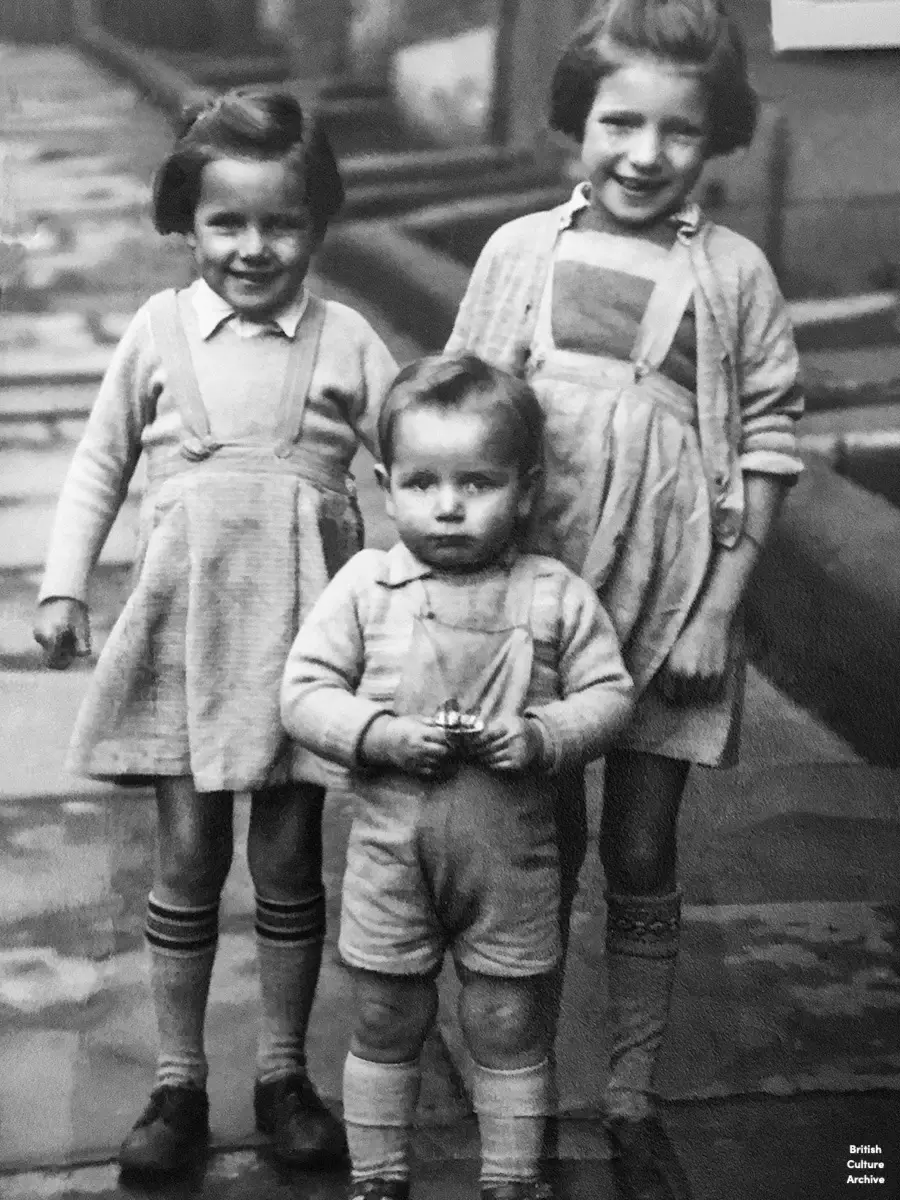
When I was growing up in the 1950s and 60s, children had no say whatsoever in their clothing. Your mother bought it, you wore it, and any suggestion that you didn’t like it was met with a look that could stop traffic.
Comfort was not a consideration. Fashion was something that happened to other people, usually Americans. The principal requirement of children’s clothing was that it should last long enough to be passed down to several younger siblings, preferably without showing any signs of wear.
Take short trousers.
For reasons I have never understood, boys were expected to wear short trousers in all weather conditions until somebody decided they were old enough to be trusted with long ones.
There could be snow on the ground, icicles hanging from the gutters and a bitter wind blowing through the streets of Coventry, but there you were, setting off for school with your knees exposed to the elements.
The rest of you might be wrapped in a heavy coat, scarf, gloves and woollen hat, but apparently boys’ knees were regarded as frostproof.
The shorts themselves were generally made from grey flannel, a material that combined the flexibility of cardboard with the texture of a kitchen scouring pad. If you were caught in the rain, you spent the rest of the day wearing something resembling damp upholstery.
Then there were the jumpers.
I don’t know what they made woollen jumpers from in those days, but I suspect actual sheep played only a minor part in the process. Some felt as though they had been knitted from leftover wire fencing.
You pulled one over your head and immediately began scratching.
“It’ll soften after a few washes,” your mother assured you.
It never did.
By the time the jumper finally softened, you had grown out of it, and it was passed on to some unfortunate younger child.
Buying clothes was another ordeal.
Nowadays, parents take children shopping, ask what they like and allow them to express their individuality.
In our day, you were taken to a clothes shop to be measured and fitted, much as a farmer might assess livestock.
A shop assistant would appear with a tape measure.
“Stand up straight.”
“Arms out.”
“Turn round.”
Your mother would then select something that appeared to have been designed for a child considerably larger than you.
“That’ll do him. He’ll grow into it.”
This phrase accounted for approximately half the clothing decisions made during my childhood.
Shoes were bought with room for growth. Jumpers had sleeves that covered your hands. Coats were sufficiently large to accommodate another child, should one wish to accompany you inside.
You might spend two years looking ridiculous in a coat that was too big, followed by six months wearing it with the sleeves halfway up your arms.
At precisely the moment it fitted properly, your mother would announce that you were getting too big for it.
A replacement would be purchased.
Two sizes too large.
Shoes were another source of suffering.
New shoes were stiff, unforgiving and apparently manufactured from leather normally reserved for industrial machinery.
Breaking them in was a lengthy process involving blisters, complaints and repeated assurances that they would soon become comfortable.
“They’ll give a bit.”
They didn’t.
Your feet simply surrendered.
And heaven help you if you scuffed them.
“What have you been doing to those shoes?”
Walking in them, mostly. Occasionally running.
Apparently, this was unreasonable behaviour.
Of course, everyday clothing was only part of the story.
There was also Sunday best.
Sunday best was reserved for church, family visits and occasions when your parents wanted to create the impression that they had produced respectable children.
The shirt was stiff, the collar rubbed your neck, and the trousers were pressed so sharply that you could probably have cut bread with the crease.
In some families, a tie was involved.
A tie!
On a child!
You were dressed in your Sunday best and then issued with a series of restrictions.
“Don’t get dirty.”
“Don’t sit on the ground.”
“Don’t climb anything.”
“Don’t go near the grass.”
It would have been easier to put you in a glass cabinet until Monday morning.
Family visits were particularly difficult. You were expected to sit quietly while adults discussed subjects of absolutely no interest to children.
If there were other children present, you might be allowed to play, provided you didn’t do anything that could actually be described as playing.
Running was forbidden. Football was out of the question. Climbing was unthinkable.
You could, however, sit on the floor and look at a book.
Provided the floor was clean.
Then there was the business of hand-me-down clothes.
In families with several children, an item of clothing could enjoy a working life longer than most motor vehicles.
A coat might begin its career with the eldest child, pass through two younger brothers and eventually arrive at a cousin’s house, where it would continue in active service until the lining disintegrated.
If the elbows wore through, patches were applied. If trousers were too long, they were turned up. If they were too short, the turn-ups were let down.
Unfortunately, fashion sometimes changed while an item was making its way through the family.
You might find yourself wearing a jacket that had been perfectly fashionable ten years earlier but now attracted puzzled looks from other children.
Your mother was unimpressed.
“There’s nothing wrong with it.”
And technically, she was right.
There was nothing structurally wrong with it.
It was simply hideous.
Mothers also had an obsession with ensuring children were properly wrapped up.
“You’ll catch your death.”
This warning was issued whenever a child attempted to leave the house without sufficient clothing.
A vest, shirt, jumper and coat were considered a reasonable minimum, regardless of the weather.
The fact that you were already sweating heavily was irrelevant.
Removing a jumper was apparently the first step towards pneumonia.
School uniforms offered little relief.
Grey trousers, grey shirts, grey jumpers and grey socks. The school photograph from those years generally shows a collection of solemn little faces dressed like junior accountants attending a particularly depressing conference.
There was always one child whose mother had made an unusual choice. Perhaps a brightly coloured scarf, a homemade jumper or shorts that didn’t quite conform to expectations.
Children could be merciless.
I know modern commentators often claim that children were kinder in the old days.
They weren’t.
They simply didn’t have social media on which to record their cruelty.
Yet somehow we survived.
We played football, climbed trees, built dens and returned home with our clothes covered in mud. Our mothers complained, patched the damage, washed the clothes and sent us out again.
Nobody cared whether our trainers matched our jackets.
In fact, trainers as we know them barely existed. We had plimsolls, thin canvas affairs with rubber soles that offered approximately the same protection as walking barefoot.
We had one pair.
If they were wet, you wore them wet.
If they developed a hole, you learned to avoid puddles.
I’m not suggesting that everything was better in those days.
It wasn’t.
Modern children’s clothing is generally more comfortable, practical and attractive. Children have choices we could only have dreamed of, and their parents are more inclined to listen when they complain that something scratches, pinches or doesn’t fit.
On the other hand, I do sometimes wonder whether we’ve gone a little too far.
I recently heard of parents spending extraordinary sums on designer clothes for children who will outgrow them within months.
A pair of trainers can cost more than an entire childhood wardrobe would have cost in my day.
And the child may refuse to wear them because they’re the wrong colour.
Try that argument with a mother from the 1960s.
She would have explained, in language that left little room for negotiation, that the shoes were perfectly good and that you would wear them until your toes appeared through the front.
There would have been no further discussion.
As for me, I have spent most of my adult life enjoying the freedom to choose my own clothes.
I buy shirts that don’t scratch, trousers that fit and shoes that are comfortable from the moment I put them on.
Unfortunately, I have discovered that some childhood habits are harder to shake off than others.
I recently tried on a pair of trousers. They were a little loose around the waist, but otherwise perfectly comfortable.
My partner suggested trying the smaller size.
I looked at myself in the mirror, pulled the waistband out a couple of inches and considered the matter.
“No, these’ll be grand,” I said. “A bit of room won’t hurt.”
My partner gave me a suspicious look.
“You’re not going to grow into them.”
I was about to disagree when I caught sight of my reflection.
There I was, a man in his seventies, standing in front of a mirror wearing trousers two sizes too big, using exactly the same reasoning my mother had used sixty years earlier.
The only difference was that she had expected me to grow taller.
I looked down at my stomach.
“Well, something’s still growing.”
And the really depressing part?
For the first time in my life, my mother was absolutely right.