When cleanliness was next to impossible
One of the great pleasures of modern life is the daily shower. You step into a warm bathroom, turn a tap, and within seconds you’re standing beneath a stream of hot water. There are scented shower gels, shampoos, conditioners and various other products designed to make you smell like a tropical rainforest.
You emerge refreshed, clean and smelling vaguely of coconuts.
Boomers will remember when personal hygiene was a rather less luxurious experience.
Nowadays, houses boast en suite bathrooms, power showers, heated towel rails and enough toiletries to stock a small branch of Boots. Some even have televisions in the bathroom, presumably for people who cannot bear to miss the news while washing their backsides.
In my childhood, having a bath was not a daily pleasure. It was a weekly obligation, generally imposed on Saturday evenings.
There was a good reason for this.
Hot water cost money.
The immersion heater was regarded with approximately the same suspicion as an unattended electric fire. Switching it on was a major household decision, requiring careful financial consideration and, preferably, the consent of whoever paid the electricity bill.
Woe betides anyone who left the immersion on accidentally.
You might as well have set fire to a five-pound note.
Saturday night was designated bath night because Sunday was a day for being presentable. Whether you were going to church, visiting relatives or simply being inspected by the neighbours, you were expected to look clean.
The fact that you might remain largely unwashed for the following six days seemed perfectly acceptable.
There were, of course, economies to be made.
Heating an entire bathful of water for every member of the family was regarded as extravagance bordering on criminal irresponsibility.
The solution was simple.
Fill the bath once.
Everybody uses it.
This arrangement introduced a rigid social hierarchy into the business of personal hygiene. The first person enjoyed clean, hot water. The second inherited something slightly cooler and less transparent. By the time the last person climbed in, the experience bore little resemblance to bathing.
It was more like being immersed in a weak vegetable stock.
The allocation of bathing positions was not democratic. Nobody drew lots or held a family meeting. Your place was determined by age, gender and whatever mysterious rules the adults had established.
There was no right of appeal.
My most memorable experiences of this system occurred during childhood holidays at my granny’s cottage in rural Donegal.
It was a wonderful place, but it did not offer many of the facilities that modern holidaymakers regard as essential.
There was no en suite bathroom.
There wasn’t even an un-en-suite bathroom.
In fact, there was no running water at all.
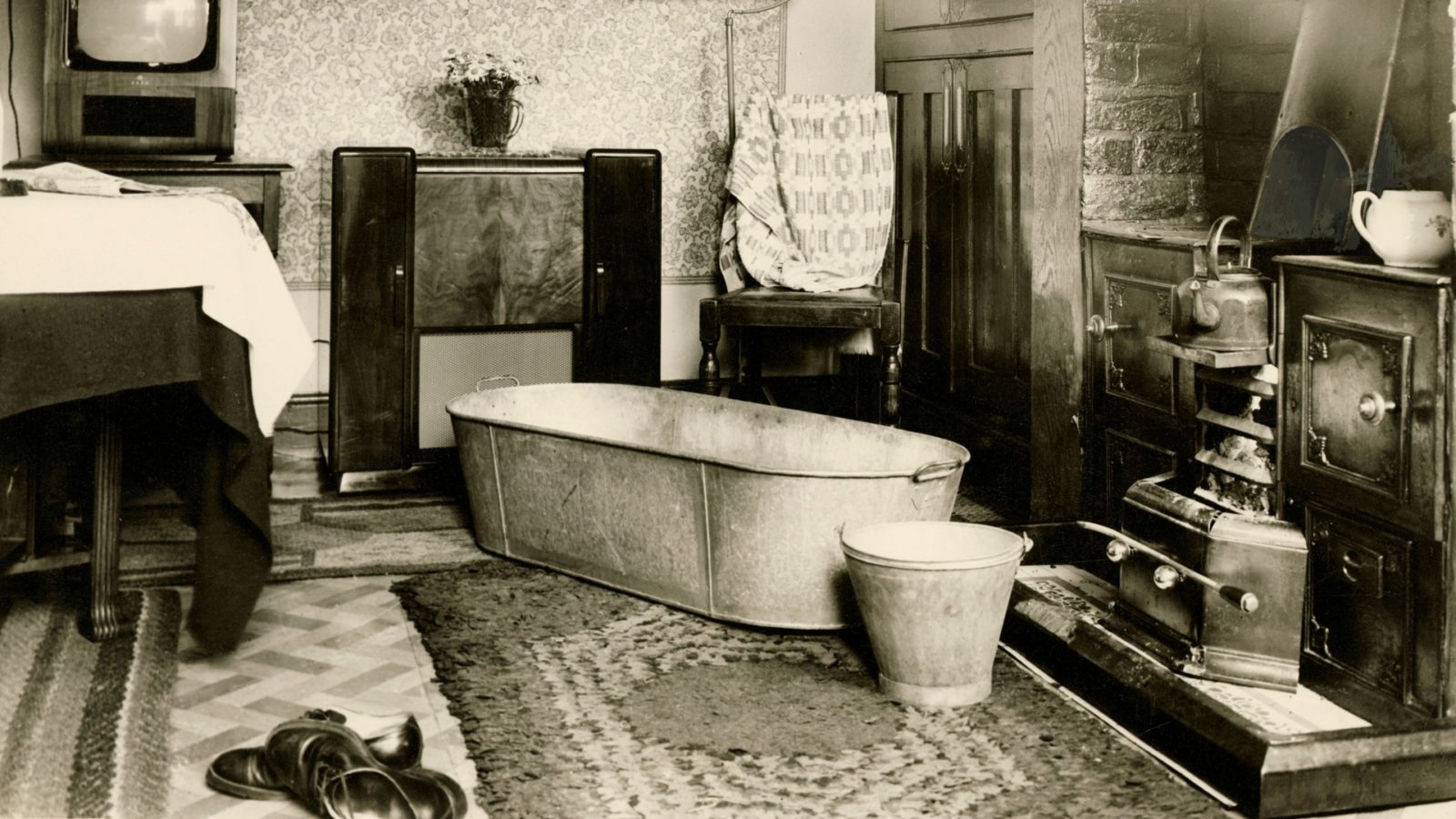
Water had to be fetched from a nearby stream, carried back to the cottage in buckets, heated in a kettle on the range and poured into a tin bath in the lower bedroom.
Try explaining that arrangement to a modern teenager.
They would immediately contact the accommodation provider, demand a refund and post a devastating review on TripAdvisor.
“One star. No Wi-Fi, no shower, and water apparently supplied by a river.”
My granny’s system was considerably more labour-intensive than anything devised by the modern hospitality industry.
First, someone had to fetch the water. This involved walking to the stream with buckets and carrying them back without spilling half the contents.
Then the range had to heat it.
Since a kettle holds considerably less water than a bath, the process required multiple journeys between the range and the bedroom.
By the time sufficient water had been heated, you could have completed a respectable engineering project.
The tin bath itself was a marvellous piece of equipment. It had no taps, no plughole and certainly no thermostatic controls. Emptying it was another exercise in manual labour.
There was also little prospect of relaxing in it.
It was designed for washing, not leisure.
When my cousins were staying, Saturday bath night became a major operation.
The girls went first, in age order.
They enjoyed the luxury of comparatively clean water, although you wouldn’t have thought so from the complaints.
“It’s too hot!”
“You’re hurting me!”
“That’s enough!”
Our mothers, armed with flannels, responded to these protests with the reassuring tenderness of people scrubbing a particularly stubborn saucepan.
“Nonsense. Hold still.”
The flannel was the principal instrument of childhood hygiene.
It was a small square of material which, in the hands of a determined mother, could remove several layers of skin.
Soap was applied, and then the scrubbing began.
Faces, necks, ears, arms and particularly the area behind the ears received special attention.
I never understood the obsession with washing behind children’s ears. I cannot recall ever seeing anybody inspect that particular part of another person’s anatomy.
Perhaps there was a secret inspection at Sunday church services.
“Good morning, Mrs McClay. Lovely to see you. Would you mind turning the wee lad’s head slightly? Ah, very good. Carry on.”
The girls complained loudly about their treatment.
They had no idea how fortunate they were.
After the girls came the boys.
And here the situation deteriorated rapidly.
The youngest boys went first, which meant they at least had the benefit of water that retained some connection with its original purpose.
By this stage it was lukewarm and slightly cloudy.
There were occasional unidentified particles floating on the surface, but nothing that would have concerned the adults.
“Sure, it’s grand.”
As each boy emerged, another was instructed to climb in.
Nobody suggested changing the water.
That would have required fetching more from the stream, heating another series of kettles and extending the entire operation well beyond bedtime.
No, the water had been heated, and by God it was going to be used.
Unfortunately, I was the oldest boy.
This meant that I occupied the very bottom of the bathing hierarchy.
By the time my turn arrived, the temperature had fallen to somewhere between cold tea and a Donegal mountain lake in November.
The colour was another matter entirely.
What had begun as clean stream water had gradually evolved into a dark brown liquid containing the accumulated evidence of several children’s weekly activities.
There was probably enough soil in that bath to support a modest crop of potatoes.
I approached it with understandable reluctance.
“Get in.”
“But the water’s filthy.”
“Don’t be talking nonsense.”
I looked at the contents of the bath.
The water looked back.
Somewhere beneath the surface, I suspected, there might have been small aquatic creatures that had survived the entire washing process and were now considering starting families.
I lowered myself cautiously into the tin bath.
The cold was immediate.
My mother, entirely unmoved by my suffering, attacked me with the flannel.
There was no gentle application of soap or comforting discussion about the importance of hygiene.
This was industrial cleaning.
My arms were scrubbed, my neck was scrubbed and my ears received the kind of attention normally reserved for evidence in a murder investigation.
I emerged bright red, shivering and deeply resentful.
Whether I was actually cleaner was open to debate.
I had certainly lost a considerable amount of skin, but I suspected I had also acquired a selection of dirt previously belonging to my cousins.
It was perhaps the earliest example of recycling I ever encountered.
Eventually, the bathwater had to be disposed of. Given its colour and consistency, it might have been more sensible to send it to a laboratory for analysis.
Instead, it was carried outside and emptied.
I sometimes wonder whether the grass where that water was thrown grew particularly well.
After all, it had received a week’s worth of organic material from half the family.
Yet we survived.
We didn’t suffer from permanent psychological damage, although I still approach tin baths with some suspicion.
And we didn’t think our circumstances particularly unusual. Many families in rural Ireland and working-class Britain lived with similar arrangements. Bathrooms were a luxury, hot water had to be paid for, and nobody regarded a weekly bath as evidence of neglect.
We were simply clean enough for the standards of the time.
Of course, today’s obsession with personal hygiene has its own absurdities.
We are encouraged to shower daily, sometimes twice daily, exfoliate, moisturise and apply an extraordinary range of products to different parts of the body.
There are shower gels for men, shower gels for women, shower gels for sensitive skin and others that promise to leave you smelling of cedarwood, sandalwood or something called Arctic Ice.
In my childhood, soap was soap.
If it removed dirt, it had done its job.
If it removed some skin as well, that was merely a bonus.
I occasionally wonder what my granny would make of a modern bathroom.
The rainfall shower, the heated floor, the enormous mirror with built-in lighting, the endless bottles of toiletries and the fluffy towels warming on a rail.
She would probably admire it for a moment before asking how much electricity the whole thing was using.
And she would be right to ask.
Nevertheless, I make absolutely no apology for enjoying my daily shower.
There is something deeply satisfying about standing under warm running water, allowing it to trickle down your back while you contemplate the day ahead.
No buckets.
No kettle.
No tin bath.
No queue of cousins.
No mysterious brown liquid.
And, most importantly, no mother approaching with a flannel and the determination to remove the top layer of your skin.
Sometimes I stay in the shower a little longer than strictly necessary.
Not because I’m particularly dirty.
Just because I can.
After all, I’ve spent enough of my life bathing in other people’s dirt.
I reckon I’m entitled to a few extra minutes of clean water.
And if anyone complains about the cost of heating it, I’ll remind them that I’m still making up for all those Saturday nights in Donegal.
Although, come to think of it, there is one worrying similarity between childhood and old age.
Back then, my mother used to shout, “Have you washed behind your ears?”
Nowadays, my partner occasionally shouts, “Are you ever coming out of that shower?”
Some things never change.
At least she hasn’t bought a flannel.