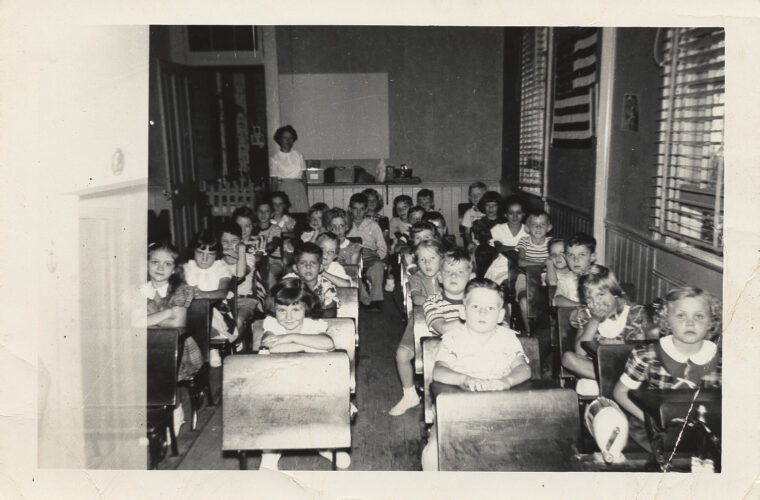
As a teenager growing up in the 1960s, I had mixed feelings about the border between County Donegal and Northern Ireland.
To my parents’ generation, the border appeared to be less an international frontier and more a complicated shopping opportunity.
Almost everyone seemed to be smuggling something.
They never called it smuggling, of course. That sounded criminal. They were simply “bringing a few things over”.
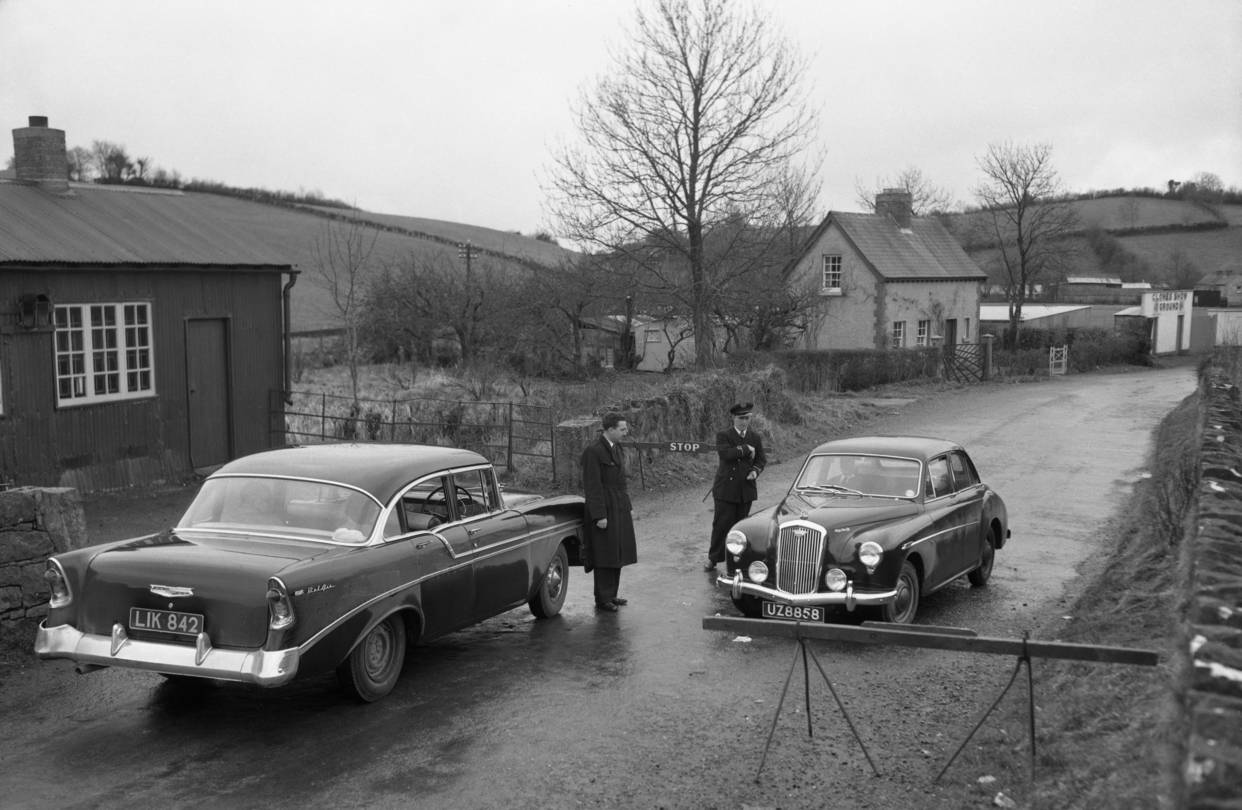
You could cross the border without a passport, but you did need a card. This was inspected not by the Gardaí or the police, but by customs officers on both sides, whose job was to make sure nobody was transporting dangerous contraband such as butter, cigarettes, tea, sugar or possibly a suspicious-looking packet of biscuits.
There were approved border crossings with customs posts, and there were countless little back roads that had no customs posts at all.
Naturally, these became very popular.
If something was cheaper in Donegal, it travelled north. If something was cheaper in Northern Ireland, it travelled south.
A remarkable unofficial distribution network developed involving cousins, aunts, neighbours and people your mother vaguely knew from somewhere near Pettigo.
Eventually the authorities began blocking some of the unapproved roads.
This caused great annoyance locally because the authorities clearly did not understand that these roads were essential to international trade.
Barriers would appear.
Then, mysteriously, barriers would disappear.
Nobody knew anything about it.
For people using the official crossings, things became more inventive.
Adults became experts at hiding goods inside cars. Items were placed under seats, behind luggage and inside places that car manufacturers had probably never intended for groceries.
Children were useful too.
You might begin a journey looking like a normal nine-year-old and arrive at the border wearing three jumpers, two coats and possibly carrying enough confectionery to open a small shop.
Your mother might also suddenly appear to have gained two stone since breakfast.
Nobody commented.
Customs officers presumably knew exactly what was going on, but there was probably only so much enthusiasm any man could summon for dismantling a Ford Anglia in search of half a pound of tea.
Then, as my generation approached adulthood, the border changed.
The Troubles arrived.
Customs posts became military checkpoints. Soldiers appeared. Roads were blocked or cratered. Cars were searched for reasons far more serious than whether somebody had bought cheaper groceries.
The old cat-and-mouse game disappeared.
Crossing the border was no longer amusing.
Thankfully, those days are behind us.
Today, crossing from Donegal into Northern Ireland is very different.
We still cross regularly, particularly to Enniskillen, but the operation is now much more sophisticated.
You could almost describe it as a financial expedition.
Women prepare properly.
There is a euro purse.
There is a sterling purse.
Sometimes I suspect there may also be a small currency reserve hidden somewhere for emergencies.
Men generally take a more relaxed approach, which usually involves producing a bank card and hoping for the best.
Before departure, the exchange rate is checked.
Then prices are checked online.
Fuel prices are compared.
We know which filling stations are cheaper.
We know which supermarkets are worth visiting.
We have established a preferred coffee stop.
There is a shopping route.
There is even a rendezvous point, because men and women often have entirely different interpretations of what constitutes an enjoyable afternoon in Enniskillen.
One person may wish to browse clothes shops.
The other has calculated that the ideal visit to a retail park should take approximately eleven minutes.
After decades of peace, however, Brexit has introduced a small new curiosity.
In Northern Ireland supermarkets, I have started noticing labels on certain food products saying:
“NOT FOR EU.”
I understand there are perfectly sensible regulatory reasons for this involving UK and EU food rules.
But emotionally, I am back in the 1960s.
I find myself looking at the packet.
Not for EU.
Interesting.
I live in the EU.
I am standing in Northern Ireland.
Suddenly I am considering transporting the product across an international frontier.
At last.
After all these years.
I could become a smuggler.
Unfortunately, modern smuggling lacks glamour.
There is no customs post.
No suspicious officer waving me into a lay-by.
No need to hide sausages beneath the spare wheel.
Nobody is going to tap the car panels looking for secret compartments.
I simply put the offending item in the boot and drive home.
Very disappointing.
There is not even the excitement of making a child wear six jumpers.
Apparently, I may transport my packet marked “Not for EU” across the border without a roadblock, a searchlight or a customs officer demanding an explanation.
It hardly seems worth breaking the law.
And I very much doubt somebody from the Food Safety Authority is going to arrive at my house at seven o’clock in the morning and inspect the fridge.
Although if that ever happens, it will confirm something many baby boomers already suspect.
The world has finally gone completely mad.
Still, until then, I shall continue my occasional cross-border activities.
Coffee.
Fuel.
Groceries.
Perhaps the odd “Not for EU” product.
My parents would have been proud.
They would probably also have known a better back road.