My first day at school began with a suspiciously thorough wash.
We had left rural Donegal and landed in inner-city Coventry, a decision in which I had played no part. I was five. Had anyone consulted me, I would have pointed out that Donegal was perfectly adequate, and I knew where everything was.
There had been no warning about school. No discussion. No visit to meet a friendly teacher. My mother simply washed me with exceptional rigour one morning and put me into a little white shirt and grey flannel shorts.
I should have spotted the signs. Nobody scrubbed behind your ears like that unless you were about to be presented to someone.
At the school, we joined a gathering of mothers and children outside a door. A stern-looking woman stood at the entrance, taking delivery.
One by one, children were handed over, and their mothers departed with a sense of freedom.
The boy ahead of me was called Keith.
I remember his name because Keith was the first person I ever saw take a principled stand against compulsory education.
He was screaming at a volume that must have caused concern in the neighbouring area.
I watched in horror. Until that moment, I had assumed my mother and I were merely visiting this place. Perhaps she knew the woman. Perhaps we were dropping something off.
It was becoming clear that the something was me.
Keith held out well. His mother held his upper body while the stern looking woman tried to release Keith’s feet from the door side panels. Given a second child of similar determination, they could probably have kept that entrance closed until lunchtime.
Eventually, the adults prevailed. Feet from the door side panels.
When my turn came, I walked in quietly. This may have been recorded as a successful transition. In fact, I had just watched them overpower Keith and concluded that resistance was futile.
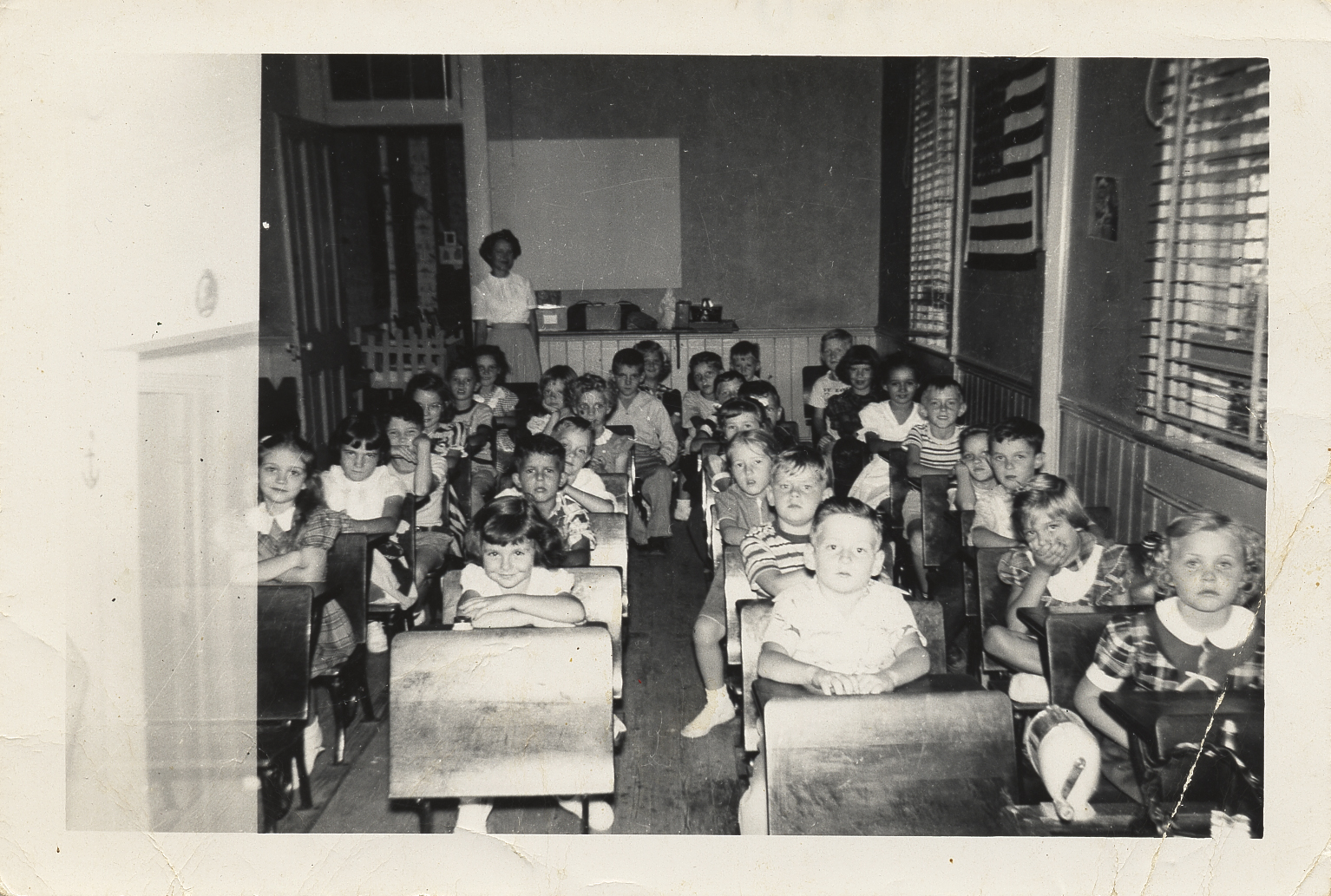
Inside were rows of desks. We were told to find an empty one and sit down. Within minutes, there were reading books and basic arithmetic.
I was still trying to work out whether my mother was coming back, and somebody wanted to know how many apples I would have if I acquired another two.
I didn’t want any apples. I wanted my mother, my own clothes and an explanation.
Recently, I had reason to look at how children are introduced to school nowadays.
Apparently, the first day focuses on “emotional comfort, gentle transition and play-based acclimatisation”.
I don’t think that policy was in place in 1957.
My acclimatisation consisted of seeing Keith carried through a doorway.
Modern children are offered “soft-landing activities”. These include Lego, colouring and playdough, to redirect their attention from missing home to having fun.
I don’t remember a soft landing. I remember a wooden chair and desk.
There is also supervised playground play. Teachers watch carefully for isolated children, help them join games and assist them in managing their “big emotions”.
I could have done with someone managing Pat Butcher.
Pat was a hefty girl who pinned me against a wall and informed me that her friends didn’t like me.
This was useful information, although I felt it could have been delivered by letter.
I had only recently arrived from Donegal. I hadn’t had time to offend a whole committee.
Nobody appeared to facilitate an early friendship. There was no adult crouching beside us saying, “Pat, can we think of a kinder way to express that?”
I stood there until Pat had finished explaining my position in the school community. Then she let me go.
I have forgotten most of what I was taught that year. Pat’s lesson remains remarkably clear.
Nowadays, navigating the lunchbox is apparently a major event.
Teachers and classroom assistants help children open tricky containers, peel fruit and manage their water bottles.
Manage their water bottles?
At five, I was managing Pat Butcher.
I appreciate that some modern lunchboxes require a working knowledge of engineering. There are clips, compartments, seals and little removable trays.
Our food had considerably less security. A sandwich was wrapped in paper. If you couldn’t get into it, hunger would eventually provide the necessary qualifications.
And fruit generally came with the expectation that you would negotiate with it yourself.
Finally, there is the end-of-day “reassurance lineup”.
Children are kept safely inside or in an orderly line until the designated parent or guardian is identified. They are then handed over with a brief, positive account of their day.
“Oliver explored the creative area and made a lovely connection with another child.”
I’d love to have heard an honest recap of mine.
“Ian submitted without a struggle, failed to show much interest in the apples and has already been interviewed by Pat.”
Of course, I’m glad children are looked after better now. That first day was frightening. A bit of kindness and someone telling me when I was going home would have done no harm.
We were expected to cop on very quickly in those days, usually before anybody had explained what was happening.
But I do wonder whether we’ve gone a little far when a sandwich, a bottle of water and five minutes in a playground require so much professional support. There must still be room for a child to discover that a lid turns anticlockwise.
And I sometimes wonder what became of Keith.
He may have settled down and enjoyed school. He may have gone on to university.
But if they’d listened to him that first morning, they could have saved themselves years of research into gentle transitions.
Keith had identified the problem before he even got through the door.