There must have been a meeting.
I’m convinced of it.
Somewhere, years ago, a group of people sat around a table and came up with what, on paper, should have been the worst restaurant idea in history.
“Right,” said one of them, “we’ll sell food people can eat without a knife, fork, plate, tablecloth, or any of the normal things associated with civilisation.”
“Interesting,” said another. “Will there be waiters?”
“No.”
“Menus?”
“Barely.”
“Comfortable seating?”
“Absolutely not. Hard plastic. Preferably fixed to the floor, so nobody gets notions.”
“And how will people pay?”
“Up front. Before they eat.”
At this point, someone sensible should have stood up and said, “Lads, this is not a restaurant. This is a petrol station with ketchup.”
But no. The idea took off.
And here we are, decades later, willingly queuing for food in cardboard boxes, sitting on chairs designed for people with no hips, and pretending that this is a day out.
The whole thing is ridiculous when you think about it. The menu is limited. The food arrives wrapped, boxed, bagged and stacked like something being shipped through customs. The napkins are made from a material with the absorbency of baking parchment. You collect your own meal, carry it to your own table, clean up afterwards, and still somehow feel grateful.
It is the only place where you do half the work and leave thinking, “That was handy.”
And then, of course, came the masterstroke.
The children’s meal.
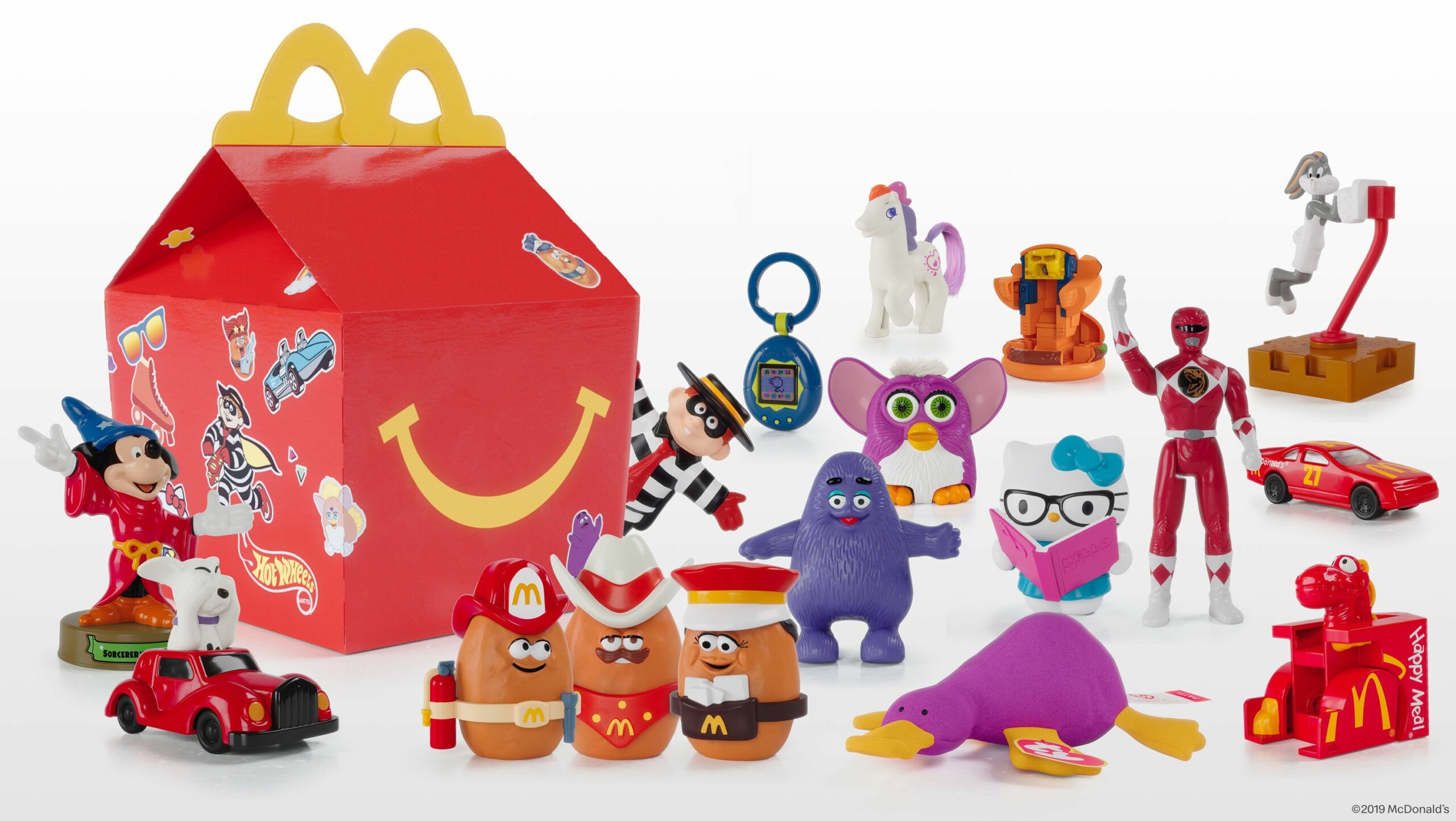
Not just food. Oh no. Food with a toy.
A tiny, useless plastic toy that no adult would accept as a free gift unless it came with an apology. A toy that does nothing, lasts ten minutes, and will eventually be found under the passenger seat of the car beside a fossilised chip and an old parking ticket.
But to a child, it is treasure.
That little toy changed everything. It turned a burger and a few chips into an event. A destination. A campaign. Once children discovered the Happy Meal, ordinary eating was finished.
“Would you like to go somewhere nice for lunch?”
“No.”
“Would you like soup and a sandwich?”
“No.”
“Would you like roast chicken and proper potatoes?”
“No.”
“Would you like a Happy Meal?”
Suddenly they are putting on shoes they claimed five minutes earlier they could not find. Coats are being zipped. Seatbelts are fastened. The energy that was missing during homework, tidying, walking, talking, or basic obedience has returned in full.
And we fall for it every time.
We say it is for the children. That is the great excuse.
“Ah sure, the kids love it.”
They do. But let’s be honest, by the time you’re in the door and the smell of chips hits you, your own moral resistance has collapsed. You might have left the house intending to have “just a coffee”, but five minutes later you are staring at a screen wondering if you should make it a large meal.
The modern ordering screen is a test of character. You start confidently enough.
Burger.
Meal.
Drink.
Then it starts interrogating you.
Large?
Medium?
Cheese?
Bacon?
Dip?
Another dip?
Remove pickle?
Add onions?
Change drink?
Upgrade fries?
Donate to something?
By the end of it, you have accidentally ordered a chicken wrap with no chicken, three drinks, two fries, a mystery sauce, and a toy from a film you have never heard of.
Then you wait for your number.
There is always a screen. There are always numbers. Your number is always almost next but never actually next.
Number 42.
Number 43.
Number 49.
You are 44.
How did 49 get there? What happened to 44? Is 44 being prepared? Has 44 been rejected? Has 44 gone to another branch?
Eventually, your tray arrives, and you carry it carefully across the floor like a hospital porter moving vital organs. The children are already halfway through a row about who got the better toy. Someone wants ketchup. Someone else doesn’t like the drink they specifically asked for. A small person has opened the box, removed the toy, and now regards the food as a side issue.
You sit down.
Well, you perch.
The seat is hard, shiny, and placed at a distance from the table that suits nobody over the age of six. The table wobbles. There is a smear of something in the corner. You hope it is sauce. You choose not to investigate.
For the first few minutes, it is all grand.
That first chip is lovely. Let’s not lie. Hot, salty, dangerous. The burger tastes better than it has any right to. You start thinking maybe people like me complain too much. Maybe this is modern life. Maybe cutlery was overrated.
Then, halfway through, regret enters quietly.
The bun collapses. Sauce appears on your sleeve. Lettuce slides out in a manner lettuce should not. The chips that were glorious five minutes ago are now cooling into little sticks of salted cardboard. You keep eating, not because you are enjoying it exactly, but because you bought it and there are people in the world with no food, which is the argument Irish parents used to justify finishing absolutely anything.
The children, meanwhile, are finished.
Not the food. Just the experience.
They have taken two bites, drunk half a fizzy drink, lost interest in the toy, and are now asking for ice cream. One of them has ketchup on their face. Another is climbing on the seat. Someone has dropped a chip and is insisting it can still be eaten because “it only touched the floor a little bit.”
Then comes the clear-up.
This, too, is apparently part of the charm. You gather up the wreckage of your own meal and approach the bins, which now require a degree in environmental management.
Paper here.
Plastic there.
Liquids somewhere else.
Tray on top.
Dignity, presumably, into general waste.
You leave feeling oddly triumphant, as if you have completed an obstacle course.
For the first hour, everyone agrees it was a success.
Then the thirst begins.
Then the heaviness.
Then the burping.
By teatime, you are in the kitchen looking for heartburn tablets and saying things like, “That stuff doesn’t agree with me anymore,” as if there was ever a golden age when a burger, chips, fizzy drink and an ice cream sat lightly on the stomach.
You start longing for the old ways.
A proper plate.
A knife and fork.
A glass tumbler.
A tablecloth, even one with a suspicious stain near the salt cellar.
A waitress who calls everyone “love” and brings extra gravy without needing an app, a QR code, or your mother’s maiden name.
You tell yourself you are finished with fast food. Absolutely finished. Next time, you’ll go somewhere proper. Somewhere with vegetables. Somewhere where the food arrives at the table and you don’t have to listen for your number like you’re waiting at the Social Welfare office.
And then, a few weeks later, you are in the car with the grandchildren.
A little voice from the back says, “Can we go to Mc—”
You don’t even let them finish.
You know.
You could say no. You are the adult. You have lived through decimalisation, platform shoes, three-day weeks, interest rates, the internet, and self-service checkouts. You have experience. Authority. Wisdom.
But then another voice joins in.
“Please.”
Then another.
“Pleeease.”
And before you know it, you are indicating right.
Back to the bright lights.
Back to the cardboard boxes.
Back to the plastic chairs.
Back to the toy that will be loved fiercely for eight minutes and abandoned before you reach home.
That is how they get us.
Not with fine dining. Not with elegance. Not with table service or linen napkins.
With chips, convenience, children, and the dangerous little thought that maybe, just this once, it won’t repeat on you all evening.
I have outlived my time. I know that now.
I belong to the age of the proper meal. The age of cutlery. The age when eating out meant sitting down and having food brought to you by someone who didn’t shout a number across the room.
And yet there I am, every so often, sitting on a plastic chair, eating from a box, pretending I’m only there for the children.