There were few luxuries available to Irish immigrant families in England in the 1950s, but one of them was the fizzy drink.
Every few weeks, the Corona truck would arrive in the street, loaded with magnificent glass bottles of orangeade, lemonade, and exotic flavours such as cherryade. The bottles had proper metal tops and looked as though they contained something usually reserved for film stars and people who owned their own homes.
Naturally, we were not allowed any.
Corona was expensive, and my mother had three growing boys who could empty a bottle of orangeade before the bubbles had settled. She was not about to invest the family finances in a drink that disappeared that fast.
We had to wait for the Alpine man.
Alpine provided the budget version of fizzy-drink glamour. The bottles were large, the colours were convincing, and the contents were sweet enough to remove the enamel from a garden gate. To us, however, it was perfectly acceptable. We did not yet understand the concept of premium brands. If it was brightly coloured and produced a belch, it was a luxury.
There were, however, two occasions each year when we escaped fizzy-drink mediocrity.
The first was during our annual summer pilgrimage back to Donegal.
Favourite aunts would hand over holiday pocket money,
Armed with this small fortune, I would walk the three and a half kilometres to Bruckless and Gallagher’s store. The reward was a slider made with HB ice cream—which I swear tasted better then – and a bottle of fizzy drink.
I say “fizzy drink” now, but having grown up in England, I called it a bottle of pop.
I would enter Gallagher’s with the confidence of an international traveller and ask for one.
“Could I have a bottle of pop, please?”
The woman behind the counter would stare at me.
Then she would turn to the man in the brown overall.
“There’s an English caddy here asking for a bottle of pop.”
The man in the brown overall would look at me over the top of his glasses. Within seconds, he would identify my granny, my mother, the house we were staying in and probably the bus on which we had arrived.
There were no secret arrivals in Donegal. You could step off a bus in Donegal Town and, by the time you reached Bruckless, someone in Killybegs would know what you were wearing.
“He means a mineral,” the man would say.
A mineral.
This sounded much more impressive than pop. Pop was something produced in Birmingham. A mineral sounded as though it had been extracted from a sacred spring somewhere in the Bluestack Mountains.
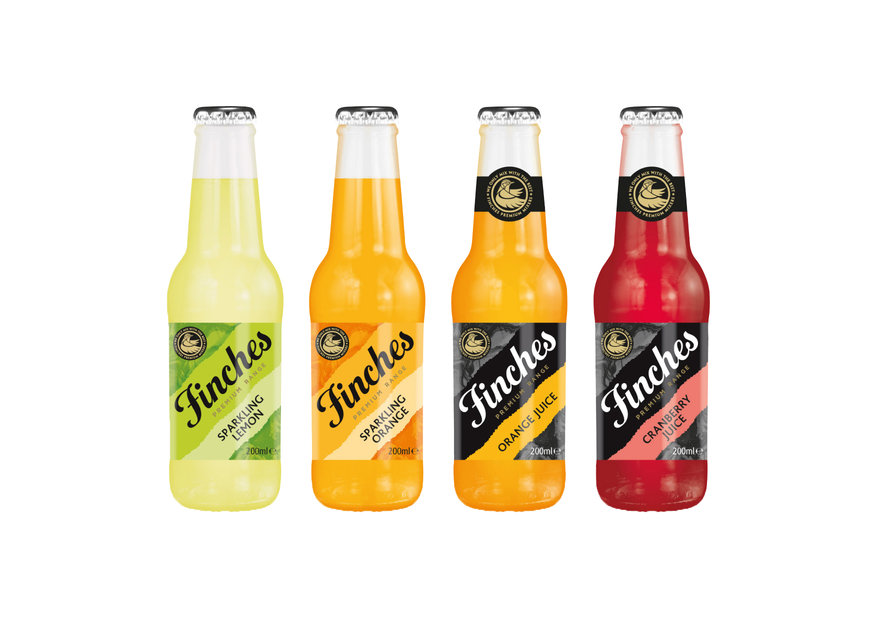
Eventually, I would leave Gallagher’s carrying a small bottle of Finches Orange. I was convinced that actual oranges had been imported especially to Donegal, squeezed individually and placed inside the bottle for my benefit.
I drank it slowly because it had cost money and because another one involved a seven-kilometre round trip.
The second escape from fizzy-drink mediocrity came at Christmas.
Irish mothers lose the run of themselves at Christmas. This is not a modern development caused by television advertising. It was happening in the 1960s.
My mother would buy White’s lemonade as though she were selecting a premium champagne. It was accompanied by a bottle of Rose’s lime cordial so that visitors could be offered the height of sophistication: lemon and lime.
When guests arrived, my mother would lift the lemonade bottle with the solemnity of someone opening a bottle of Bollinger at a royal reception.
The top would come off with a hiss.
The lemonade would pour into the glass in a bubbling explosion. Then came the crowning moment: a carefully measured dash of lime cordial.
Not too much. This was Rose’s lime, not tap water.
The liquid would turn a pale green, and the drink would be presented to the guest as though it had been mixed by a professional cocktail waiter at the Shelbourne Hotel.
We children were allowed one as well.
One.
There were no refills, no supersized glasses, and certainly no helping yourself. You received your lemon and lime and treated it with respect.
I sometimes think I should recreate this moment at Christmas. I could arrange the premium lemonade and lime cordial on a tray, bring out the best glasses, and carefully prepare the drink for assembled family and friends.
I would pour the lemonade with great ceremony. I would add the lime cordial with the precision of a chemist. I would hand over the finished drink and wait for the appreciation.
Then someone would examine the bottle and ask:
“Is this lemon and lime zero?”
And the entire magic of Christmas would disappear in one sentence.