Before Google, buying anything expensive involved a mixture of guesswork, pub wisdom and asking somebody who “knew about these things.”
You wanted a washing machine? Someone at work had a Hotpoint that had been going since 1968.
Buying a car? Your brother-in-law knew a man who said Ford parts were cheap.
And there was always somebody in the pub who advised you never to buy anything French, Italian or Japanese, usually while driving home in a Morris Marina held together by rust and optimism.
But we weren’t completely in the dark. In the 1970s, in England anyway, we had Which? magazine.
I loved Which?
I actually subscribed to it.
Other young men were buying music magazines, following football or discovering girls. I was waiting excitedly for a magazine containing a twelve-page comparison of twin-tub washing machines.
It was basically Playboy for people who enjoyed tables.
Every month it arrived full of sober-looking charts comparing vacuum cleaners, televisions, fridges, kettles and cars. Everything was tested, measured, scored and ranked.
This appealed enormously to me.
Here, at last, was proof that life could be organised.
You didn’t have to walk into a shop and say, “I like the blue one.”
You could arrive armed with facts.
“I think you’ll find this model scored only 63% for spin efficiency.”
You could become the sort of customer that sales assistant who suddenly remembered to have an appointment elsewhere.
My finest hour came when I decided to buy my first brand-new car.
This was serious business.
I drew up a list of all the things that mattered: reliability, fuel economy, comfort, performance, servicing costs and so on.
Then I made a shortlist of cars I could afford and gave each one a mark out of ten.
But that wasn’t enough.
Oh no.
I then weighted every category according to importance.
Reliability might get a five.
Fuel economy a four.
Boot space perhaps a two.
I had discovered weighting.
For a few glorious days I was no longer a young man buying a car. I was in the procurement department of British Leyland.
And remember, there were no spreadsheets.
Excel was decades away.
This was all done with a pencil, ruler and calculator on the kitchen table. Columns. Rows. Multiplication. Totals.
I had effectively invented Microsoft Excel, except mine had tea stains on it.
Looking back, I clearly had too much time on my hands. There were only three television channels, of course, and if BBC1 had snooker on in black and white, this probably counted as entertainment.
Eventually the great calculation was complete.
The scores were added.
The weightings were applied.
The mathematics had spoken.
And the winner was…
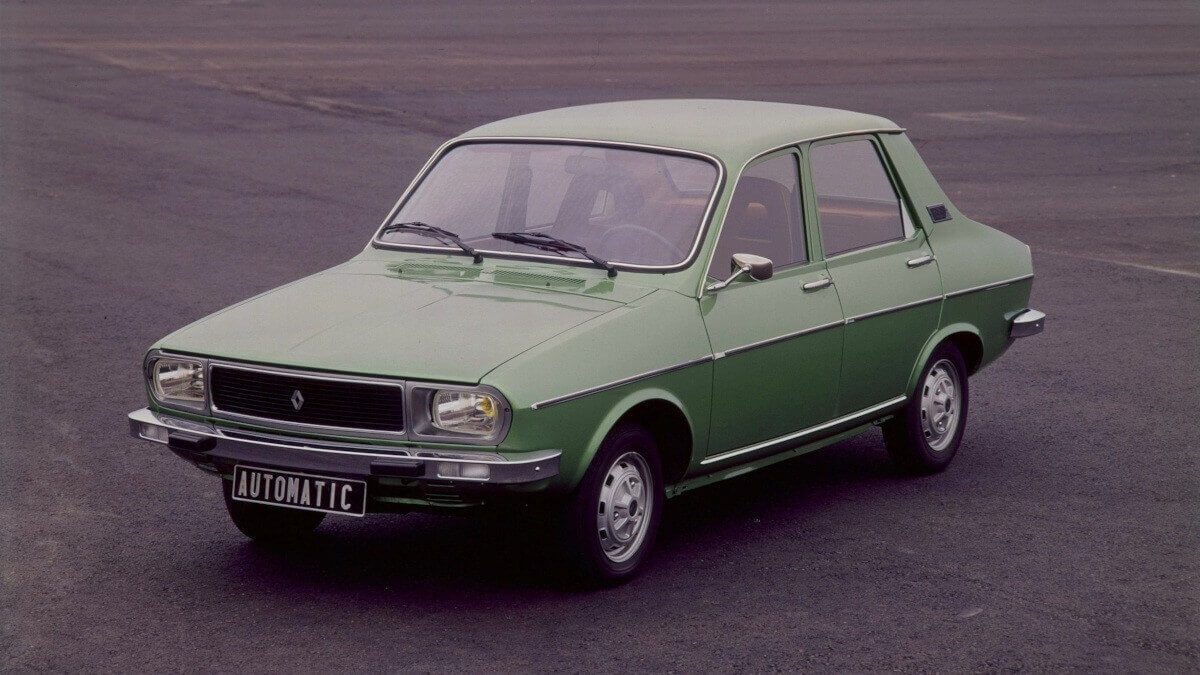
The Renault 12.
I stared at the page.
There had obviously been some mistake.
I checked the figures.
Still the Renault 12.
I recalculated everything.
Renault 12.
This was becoming serious.
The Renault 12 might have been reliable, economical, comfortable and beautifully engineered. I have no idea. None of that mattered.
I thought it was an ugly box.
Worse still, it was French.
This was the 1970s, when large sections of the British population regarded buying a French car as only slightly less suspicious than joining the Communist Party. I have since learned the error of my ways and now admire their food, wine and intellectual confidence.
My magnificent scientific system had recommended a car I didn’t want.
This was awkward.
I had set out to prove that I was a cool, rational, modern consumer guided entirely by evidence.
Unfortunately, the evidence was telling me to buy a Renault 12.
There was only one possible conclusion.
The evidence was wrong.
Then I spotted the problem.
In my elaborate list of important features I had forgotten one fairly fundamental question:
Do I actually like the bloody thing?
I had reliability.
I had fuel economy.
I had servicing costs.
I had luggage capacity.
But nowhere had I included:
Does it look good parked outside the house?
Nor had I allowed points for:
Will I turn around and look at it after I’ve parked it?
Or the crucial:
Will I feel slightly pleased with myself when someone sees me driving it?
I had also failed to include a weighting for my own irrational prejudice against French cars, which, had I been completely honest, would probably have scored about seven out of five. I have since learned the errors of my ways driven by a love of their food and wine.
So the entire exercise collapsed.
Weeks of analysis, mathematics and consumer science were abandoned because I didn’t fancy the winner.
I tore up my primitive spreadsheet and bought something much more sensible.
By sensible, I mean it had fake alloy wheel trims.
Proper alloys were far too expensive, so manufacturers supplied plastic discs designed to look vaguely like them if viewed from the opposite side of a dual carriageway.
It also had a go-faster stripe.
I particularly liked the go-faster stripe.
The engine was probably incapable of going noticeably faster than anything else, but the stripe suggested that it could.
There may also have been a small rear spoiler.
Again, aerodynamically pointless, but it gave the impression that at any moment I might qualify for the Monte Carlo Rally instead of driving to Tesco.
And I was happy.
That was when I decided I wasn’t going to spend my life as Mr Spock.
Logic has its place.
But sometimes a man wants a stripe down the side of his car.
The funny thing is that age eventually reverses all this.
At twenty-five you want spoilers, stripes and alloy wheels.
At seventy you climb into a car and say:
“Ooh, these seats are comfortable.”
Heated seats are now performance equipment.
A heated steering wheel is practically a sports package.
My friend Phyl will happily judge a car by whether it warms your backside before you’ve reached the end of the road.
And why not?
At our age, comfort is the new horsepower.
Younger people can have 0–60 times.
I want lumbar support.
So perhaps Which? was right all along.
It taught us to compare things properly, examine the facts and make rational decisions.
It also taught me something even more useful.
You can create charts, allocate scores, apply weightings and calculate the perfect answer…
…and then completely ignore it because you don’t like the look of the Renault.