When I was young, and that is now a frighteningly long time ago, a holiday did not involve passports, airport parking, online check-in, or trying to work out if a cabin bag was actually a cabin bag or a financial trap.
A holiday meant going back to Ireland to stay with relatives.
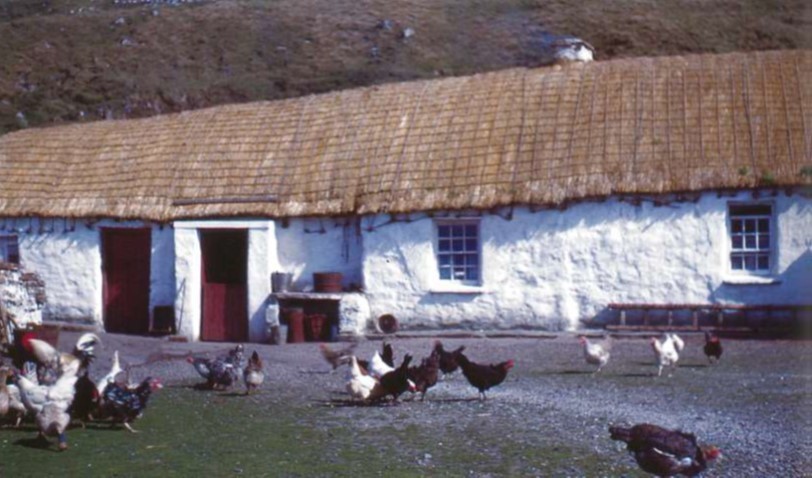
For me, that meant my granny’s house in Donegal.
At the time, I thought she was delighted to see us. We arrived from across the water like returning royalty, full of noise, questions and appetite. Looking back now, I may have been overestimating her joy. When a woman says, “I’d rather feed you for a week than a fortnight,” she is probably not overcome with emotion. She is doing mental arithmetic involving potatoes, bread, tea, butter and the mysterious ability of children to eat again half an hour after being fed.
There was no such thing as “self-catering” because everything was self-catering. Granny did the catering and we did the eating.
Nobody asked what we wanted to do that day. We were told to go outside. That was the activity programme. Outside was where children belonged, unless it was raining, in which case we were still encouraged to go outside but with a coat on.
Entertainment was simple. Cousins appeared. Dogs wandered in and out. Adults talked in the kitchen in low voices about neighbours, illness and people who had “gone a bit strange.” We children drifted about, half bored and half happy, which is probably the proper condition of childhood.
Later in life came the caravan park in South Wales.
This was meant to be a step up. There was a shop, a beach, and a man who walked about with keys and an air of authority. The caravan owner had rules that would have suited a strict Blackpool landlady. Do not waste the gas. Do not bring sand in. Do not move the cushions. Do not touch that switch. Nobody knew what the switch did, but we were left in no doubt that touching it would bring shame on the family.
You felt less like a holidaymaker and more like someone who had been given temporary shelter after a minor national emergency.
The caravan itself was cosy, which is another word for too small. If one person stood up, someone else had to sit down. At night, the wind shook the walls and you lay there wondering if caravans were meant to bend.
But it was a holiday, and that was enough.
Now I am back in Ireland, and holidays have become a regular feature of family life. Irish families go away now with the same frequency as banks change interest rates. Easter break, summer holiday, mid-term, winter sun, and the odd “sure the flights were cheap” getaway, which is always the start of trouble.
The whole thing has become a ritual.
First, you go online and look at the photographs. There are palm trees, blue pools, white buildings and rooms that look as if the Beckhams have let out one of their spare houses. Everyone in the pictures is slim, tanned and relaxed. Nobody is carrying a Lidl bag full of sun cream, flip-flops and emergency biscuits.
Then reality begins.
The bargain holiday involves a flight from Dublin at Silly o’Clock. This is not an official time, but every Irish person knows it. It is somewhere between “why are we doing this?” and “I haven’t slept.”
You leave the house in darkness. Nobody is speaking properly because everyone is tired and afraid of forgetting something. There is always a row about passports, phone chargers, or whether the back door was locked. The person who says, “I’m sure it’s grand,” is never the person who locked it.
At the airport, it is somehow packed. Thousands of people are wandering around at four in the morning as if this is normal behaviour. Children are crying. Parents are carrying too many bags. Someone is eating a full Irish breakfast beside Gate 112 and you find yourself admiring him, while also worrying for him.
Sleep deprivation is used as a form of torture in some parts of the world. In Ireland, we call it “getting a good deal.”
Eventually, you get on the plane and discover you are sitting near a stag group from Meath. They have been in the airport bar since 5am and are now full of confidence, lager and poor decisions.
One of them calls the air hostess “boss.” Another has lost his boarding pass while sitting in the seat printed on it. A third is explaining loudly that he “doesn’t normally drink,” which is greeted with howls of laughter from his friends.
You land in the sun looking like people who have escaped from a cellar.
Then you discover the transfer bus is late. Worse still, the transfer itself is ninety minutes because you did not read the small print. Nobody reads the small print. The small print is where disappointment lives.
The locals watch us arrive with quiet amazement. There we are, pale Irish people in Lidl middle-aisle summer clothes, sun hats bought in a panic, and sandals that should never have left the garden. We arrive white, turn pink by Tuesday, and by the second week some of us are the colour of boiled ham.
Then we come home and return to our natural shade within twenty-four hours.
At the resort, the first battle is for the sunbeds. This is not relaxation. This is war with towels. People who cannot get out of bed at home for work suddenly rise at dawn to reserve a lounger they may not use until lunchtime. The towel is planted like a flag on newly conquered land.
Breakfast is another challenge. There is fruit, yoghurt, cheese, ham and small pastries. Very continental. Very civilised. Very disappointing if your body is calling out for rashers, sausages, beans and fried eggs.
You may eventually find an ex-pat bar offering a full Irish breakfast and emotional support. There will be a faded Guinness sign outside and a man from Mayo or Roscommon inside who came over for a fortnight in 2003 and somehow never went back.
By day four, everyone settles into the routine. The children want chips. The adults want shade. Someone has bought an inflatable flamingo too big to bring home. Someone else has discovered that cheap wine is only cheap until you drink enough of it.
And yet, despite the early flight, the bus transfer, the sunburn, the towel wars, the missing breakfast and the stag group from Meath, everyone insists they had a great time.
Or at least they say they did.
Because when Irish people come home from a holiday exhausted, broke, peeling and facing a suitcase full of damp clothes, there is only one acceptable verdict.
“Ah, it was grand.”
And that, in fairness, is about as good as life gets.