On my first day at work, I was still waiting for my school exam results.
This was awkward because I had been promised a job as a Clerical Officer in the British Civil Service. Clerical Officer sounded important. It sounded as though I might have a briefcase, make decisions and possibly be consulted by ministers.
Unfortunately, until I could prove that I had passed my exams, I had to start as a Clerical Assistant.
This did not sound important at all. It sounded like the person who carried things for the Clerical Officer.
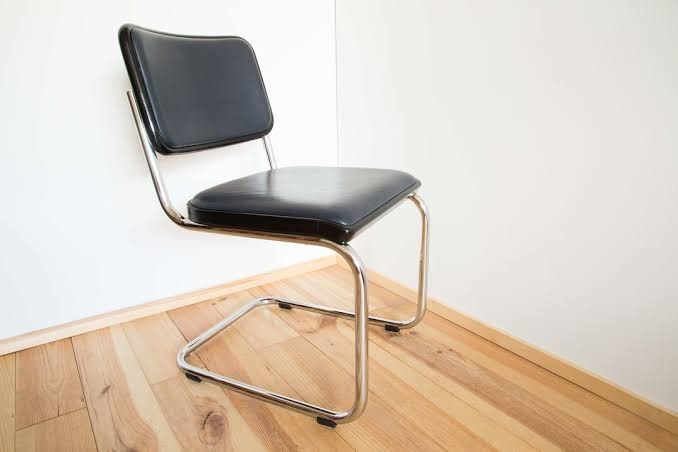
Still, I had a desk, a pen and a tubular metal chair. I spent my days writing benefit cheques, which seemed a surprisingly large responsibility to give someone whose qualifications were still somewhere in the post.
On about my third day, I arrived to find that my chair had disappeared.
Nobody seemed particularly bothered. The machinery of government carried on. Forms were stamped. Files were moved from one desk to another. Britain was not going to collapse because one Clerical Assistant had nowhere to sit.
I looked around and spotted another chair nearby. It was also tubular, but this one had arms.
It looked much better. More comfortable. More senior.
So I took it.
For the next hour or two, I worked happily. The chair gave me confidence. My handwriting improved. I may even have leaned back slightly, which was probably where I went wrong.
Eventually, a senior-looking manager appeared. He was at least three grades above me. In those days, you could tell how senior someone was by the expression on his face. The more miserable he looked, the more important he was.
He stared at me and then at the chair.
“You realise that grade of chair is only for Clerical Officers,” he said.
Until that moment, I had no idea chairs had grades.
I stood up immediately.
I briefly considered explaining that I was expecting to become a Clerical Officer as soon as my exam results arrived, but decided that sitting above my grade might be treated as a serious disciplinary offence.
A few minutes later, someone lower down the hierarchy arrived with the correct chair.
Tubular metal. No arms. No comfort. No danger of ambition.
That was my introduction to office hierarchy.
As my career progressed, thankfully outside the Civil Service, the furniture improved. First came a better chair. Then a better desk. Then an office of my own.
Eventually, I reached the top: a large office and a magnificent leather chair. It swivelled, reclined, and probably cost more than my first car.
I had finally made it.
Then somebody invented modern management.
Senior managers were told they should no longer sit in private offices. We were to sit in open-plan areas among the staff, using the same desks and chairs as everyone else.
This was called breaking down barriers.
The barrier I missed most was the door.
Before long, even the personal desk disappeared. We entered the age of hot-desking, where coming to work became like boarding a budget airline. Arrive early and you might get a decent seat. Arrive late and you could end up beside the photocopier, working on a shelf intended for spare paper.
Then came standing desks.
After spending years working my way up to a comfortable chair, I was now expected to stand all day like a man waiting for a bus.
Finally, home working arrived. This was the great breakthrough. Employers no longer had to provide a desk, a chair, an office, heating, or electricity.
You provided everything yourself and were expected to be grateful for the flexibility.
And so the circle was complete.
I started my career in a chair without arms because I was not important enough. I worked my way up to a leather executive chair, only to have it taken away in the name of equality, efficiency and progress.
You begin at the bottom, climb slowly towards great honour, and just as you reach it, somebody removes your desk.
At least it kept me humble.
And, for most of my career, correctly seated according to grade.