I recently discovered that only somewhere between 20 and 30 percent of the population irons their bedsheets.
This came as a considerable shock to me, because I am one of them. Not by choice, obviously. Nobody wakes up one morning and thinks, I hope there is a king-size fitted sheet downstairs that needs a good ironing.
In the division of labour in our house, bed-linen ironing has somehow fallen to me. I cannot remember when this was agreed, and I have never seen the minutes of the meeting, but the arrangement appears to be legally binding.
My partner, having been freed entirely from the task, is naturally a great supporter of freshly ironed sheets. She likes what she calls “the hotel-bed feeling”.
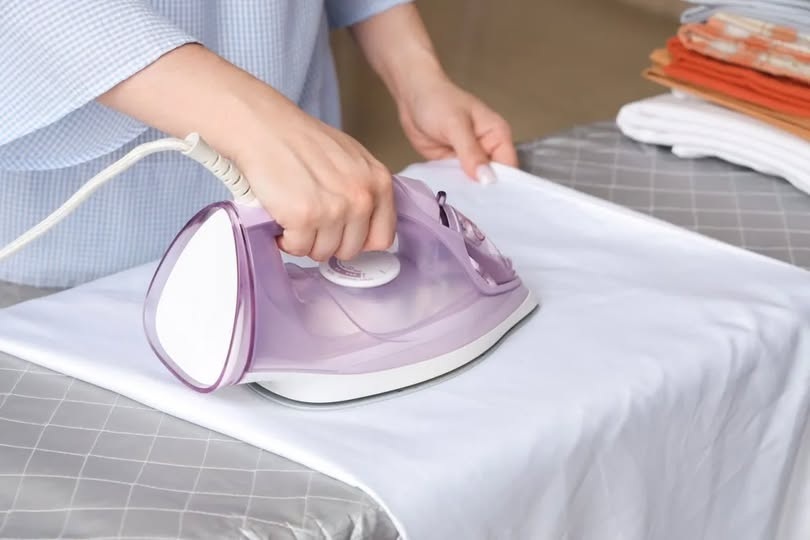
Hotels achieve this effect with industrial laundries, enormous steam presses and teams of trained staff. I achieve it alone in the utility room with a domestic iron, an ironing board designed in 1953 and rising blood pressure.
The person who invented the ironing board clearly never encountered a fitted sheet. It was designed for shirts, trousers and perhaps a small handkerchief. It was not designed for a large piece of elasticated fabric that behaves like a distressed octopus.
A fitted sheet does not lie flat. It refuses on principle.
You place one corner over the ironing board and another corner leaps onto the floor. You straighten one side and the elastic pulls the other side into a ball. At times, it feels less like ironing and more like trying to restrain a difficult child in a supermarket.
The corners are impossible.
I have watched online videos in which calm people fold fitted sheets into perfect rectangles. They tuck one corner inside another, turn something inside out, and, within seconds, are holding an object that looks as neat as a table napkin.
My fitted sheets end up resembling a parachute that failed to open.
Ironing them is even worse. To properly iron a fitted sheet, a person needs three hands: one to hold the fabric, one to control the elastic, and one to operate the iron. God gave us only two hands, which I take as clear evidence that fitted sheets were never intended to be ironed.
But the schedule must be maintained.
My partner can detect an unironed bedsheet at twenty paces. She does not need to touch it. She merely looks at the bed, narrows her eyes, and says, “Was this ironed?”
There is no point lying.
She can spot a crease the way a sniffer dog detects explosives.
Visitors make matters worse. When somebody is coming to stay, the guest bed must be transformed into the bridal suite at Ashford Castle. The sheets have to be washed, dried, ironed, and placed on the bed shortly before arrival, preferably while still warm.
It does not matter that the bed linen was washed and ironed yesterday.
“That was yesterday,” I am told.
Apparently, sheets can lose their freshness while sitting untouched in a linen cupboard. They become emotionally stale.
So out they come again, back into the washing machine, then the dryer, then onto the ironing board, where I begin another wrestling match with the elasticated corners.
Meanwhile, technology has advanced magnificently in every other area of domestic life.
We have robot lawnmowers that patrol the garden without complaint. Washing machines send messages to our phones. Fridges can tell us we are running low on milk. Vacuum cleaners wander around the house, bump into furniture, and return to their charging stations when they have had enough.
Yet nobody has invented a machine that can iron a fitted sheet.
I suspect the engineers have tried.
Somewhere in a secret laboratory, a prototype robot was probably handed a king-size fitted sheet. It examined the elastic corners, made several attempts, overheated, and drove itself directly into a wall.
Its final message would have appeared on an app:
Error 47: Household expectations unrealistic.
Even artificial intelligence would struggle. You could explain the task carefully:
“Please wash, dry, and perfectly iron this fitted sheet without creating any creases.”
The robot would pause for a moment and reply:
“Have you considered separate bedrooms?”
I now know that most of the population simply washes their sheets, dries them, and puts them back on the bed. Some even claim that the warmth of the body smooths out the creases overnight.
These people are living lives of extraordinary freedom.
While I am standing over an ironing board battling elastic, they are watching television, reading books, or enjoying activities that do not involve steam burns.
But change will not come easily in our house.
I mentioned the statistic to my partner.
“Only 20 to 30 per cent of people iron their bedsheets,” I said, expecting sympathy and perhaps the immediate abolition of the practice.
She thought about this for a moment.
“Well,” she replied, “we clearly have higher standards.”
And that was the end of the revolution.